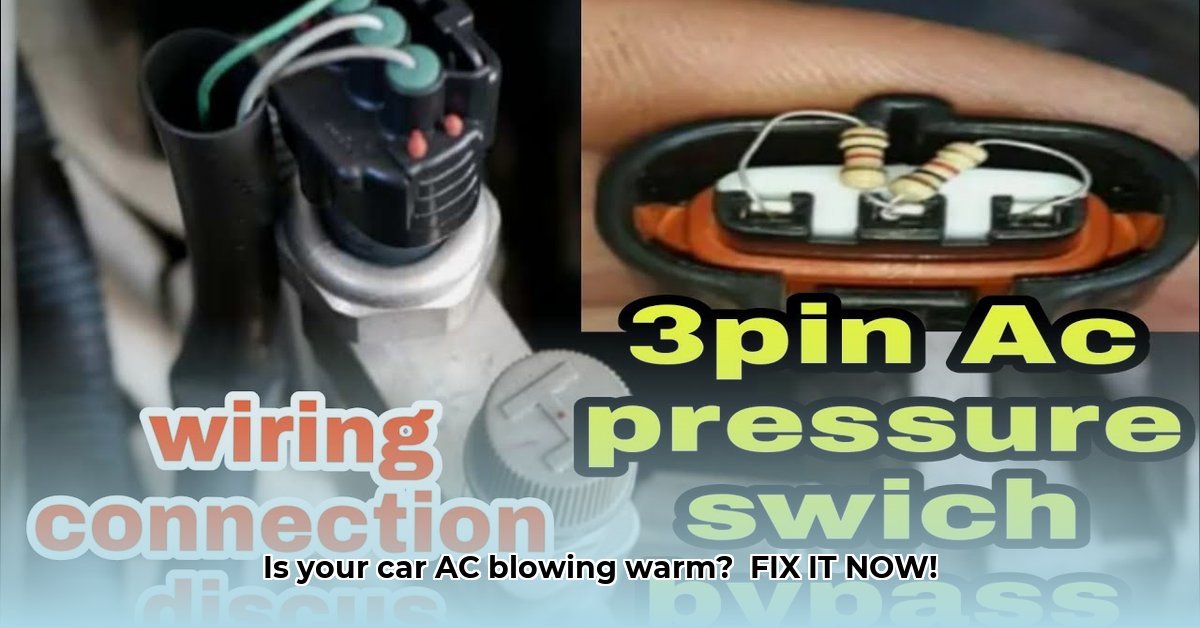
How to Check Your Car's AC Pressure Switch: A Step-by-Step Guide
Is your car's AC blowing warm air instead of the cool comfort you expect? A faulty AC pressure switch could be the culprit. This guide provides simple steps to check it yourself, saving you potential repair costs. We'll explain what the switch does, how to test it using a multimeter (a device that measures electricity), and what to do if you find a problem.
Understanding Your Car's AC Pressure Switches
Your car's AC system needs the right refrigerant pressure to function correctly. Two pressure switches act as safety devices for your AC compressor (the part that makes the whirring noise):
- Low-Pressure Switch: Prevents the compressor from starting if refrigerant pressure is too low, protecting it from damage.
- High-Pressure Switch: Stops the compressor if pressure gets too high, preventing system overpressure.
If either switch malfunctions, your AC may not turn on or might shut off unexpectedly, resulting in warm air and potential for more serious, costly problems.
Recognizing Problems: Signs of a Faulty AC Pressure Switch
Before testing, identify potential symptoms:
- Warm or Weak Airflow: Instead of cool air, you're getting lukewarm air, or the usual cold air is noticeably weaker.
- Compressor Doesn't Engage: The compressor doesn't start.
- Erratic Cycling: Your AC turns on and off erratically.
- Unusual Compressor Noises: Grinding, clicking, or other odd sounds from the compressor.
These symptoms suggest a potential problem and warrant checking the pressure switches.
Tools You'll Need
Testing your AC pressure switches requires these common tools:
- Digital Multimeter (DMM): Measures electrical resistance. Think of it as an electrical detective.
- Vehicle Wiring Diagram: Located in your owner's manual or online, this diagram shows switch locations.
- Basic Hand Tools: Screwdrivers (type depends on your car).
- Safety Glasses: Protect your eyes.
Crucial Safety Step: Always disconnect your car battery's negative terminal before starting any electrical work to prevent short circuits.
Checking Your AC Pressure Switches: Step-by-Step Instructions
Follow these steps to test your pressure switches:
Locate the Switches: Use your vehicle's wiring diagram to find the high and low-pressure switches. They're typically near the AC lines under the hood.
Unplug the Connector: Carefully disconnect the electrical connector from the switch being tested. Avoid damaging the connector or wiring.
Set Your Multimeter: Set your DMM to measure ohms (resistance), usually indicated by "Ω".
Test for Continuity: Touch the multimeter probes to the switch's terminals. A good switch will show a reading near zero ohms. A high or infinite reading (open circuit) suggests a faulty switch.
Optional Resistance Check: If your repair manual provides specific resistance values, compare your reading to the factory specification.
Repeat: Repeat steps 2-5 for the other pressure switch.
Interpreting Your Results
- Zero or Near-Zero Ohms: The switch is likely working correctly. However, this doesn't eliminate other AC system problems.
- High Resistance or Open Circuit: This strongly indicates a faulty switch.
Troubleshooting Beyond the Switch
Even with working pressure switches, additional issues can affect your AC:
- Corrosion: Check connectors for corrosion and clean them if necessary.
- Damaged Wiring: Inspect wiring for breaks or damage and repair/replace as needed.
- Low Refrigerant: Low refrigerant levels can mimic a faulty switch. A leak needs professional attention.
When to Call a Professional
While checking the pressure switch is a relatively easy DIY task, replacing it requires more expertise and specialized tools. If you're uncomfortable working on your car's AC system or the problem persists, consult a qualified mechanic.
Remember, safety is paramount. If you're not confident in your abilities, professional help ensures your safety and the longevity of your vehicle's AC system.
Troubleshooting Car AC Low Pressure Switch Problems
Key Takeaways:
- A faulty low-pressure switch can cause poor or no cooling.
- A simple multimeter test can diagnose potential problems.
- Safety precautions are crucial when working on car's electrical systems.
- Professional help may be necessary for repair or complex issues.
Understanding Your Car's AC System (Simplified)
Your car's AC uses refrigerant to cool air. The low-pressure switch protects the compressor by preventing it from running if refrigerant pressure is too low.
Identifying Symptoms of a Faulty Low-Pressure Switch
Are you experiencing warm air, intermittent AC operation, or erratic compressor cycling? These could indicate a malfunctioning low-pressure switch, but other components may also be the cause.
Troubleshooting with a Multimeter: A Step-by-Step Guide
- Locate the Switch: Consult your repair manual.
- Prepare Your Multimeter: Set it to ohms (Ω).
- Disconnect the Switch: Carefully disconnect the switch's connector.
- Test for Continuity: Test for near-zero ohms (closed circuit). Infinity ohms (open circuit) suggests a problem, but check refrigerant pressure first.
- Re-check: Inspect wiring for damage.
Interpreting Results
- Near zero ohms: Switch likely works correctly (under proper pressure).
- Infinity ohms: The switch might be faulty; check refrigerant levels first.
Troubleshooting Tips
- Check for corrosion and damaged wiring.
- A low refrigerant level can often mimic a faulty switch. A proper pressure test is needed for accurate diagnosis.
Alternative Diagnostic Methods
While a multimeter test is helpful, a complete AC system pressure test by a mechanic provides a more comprehensive diagnosis.